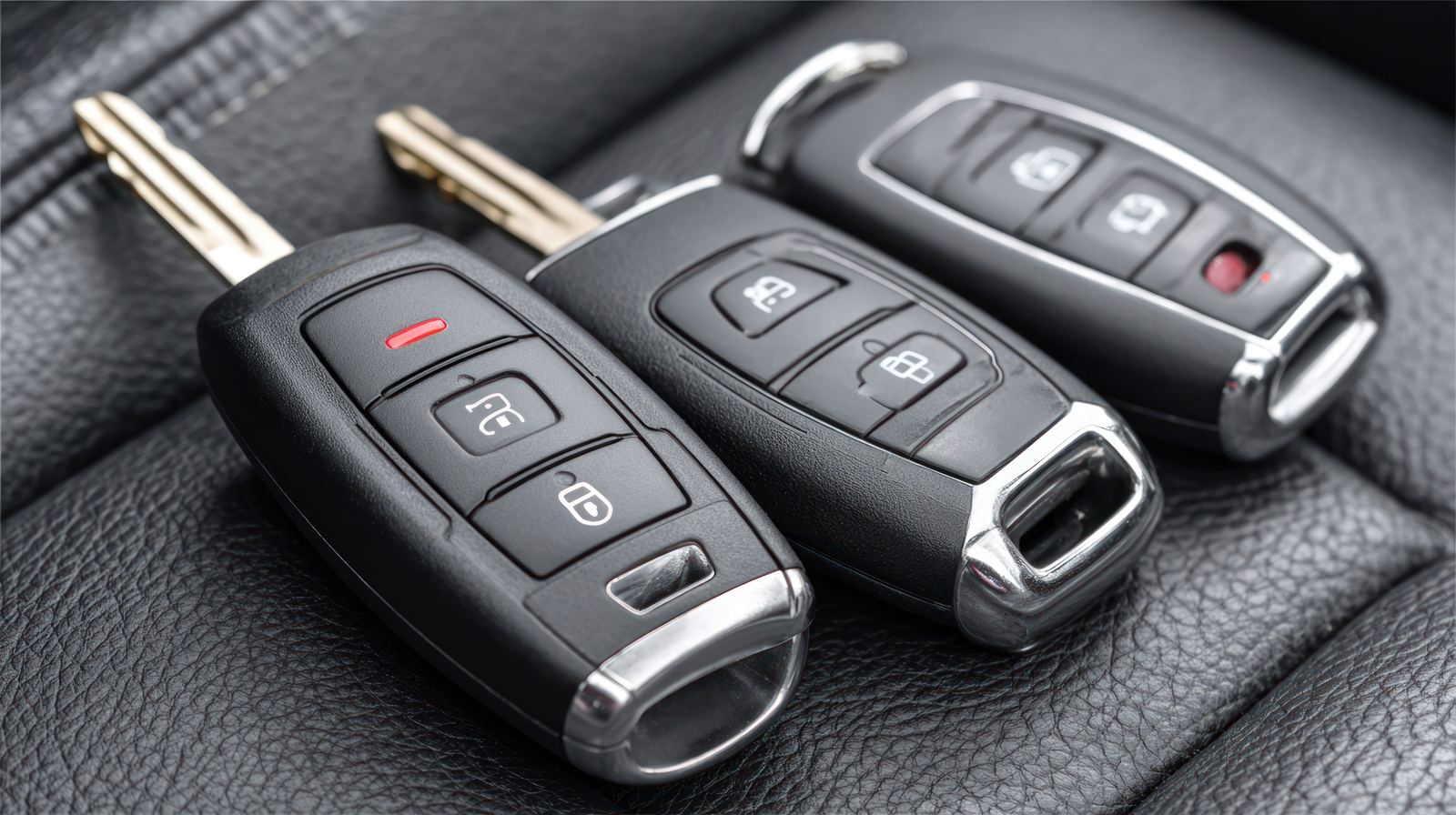
Start with the fob battery: it is the most common culprit and the fix is a coin-cell you can swap yourself in minutes. Know the distinction, though: the battery powers the remote buttons and proximity features, while the transponder chip that lets the engine start is passive and has no battery at all. If the security light flashes and the car cranks but will not start, the immobilizer is not recognizing the chip, and that is programming or chip territory.
Try these free routes first
Swap the fob battery first
Weak fob batteries cause the majority of remote and proximity key complaints: shrinking range, buttons needing multiple presses, the car intermittently failing to detect the key. Fobs take common coin-cell batteries, the type printed on the old cell and listed in your owner's manual, available at drugstores, grocery stores, and hardware stores. Most fobs open with a small notch for a fingernail or coin, and your manual or the manufacturer's site shows the exact steps for your model. Do this before paying anyone, because it resolves an enormous share of these cases.
Try your spare key or fob
The spare is a free diagnostic instrument. If the spare starts the car and works the locks normally, the problem is isolated to your primary key, most likely its battery, its buttons, or a damaged chip, and nothing is wrong with the car. If both keys fail the same way, the car side is suspect: the immobilizer system, the keyless antenna, or the vehicle's own battery. That single test cleanly splits the problem in half and will be the first question any locksmith or dealer asks you anyway.
Use the manufacturer's dead-battery backup procedure
Automakers know fob batteries die, so nearly every model has a documented no-battery fallback: a hidden mechanical key blade inside the fob that opens the driver's door, plus a backup start method such as holding the fob directly against the start button or placing it in a marked pocket or slot, where the car can energize the passive chip at close range. The exact procedure is in your owner's manual and on the manufacturer's support site under dead key fob. This gets you driving today, free, while you sort out the battery.
Rule out the car's own battery
A weak or dead twelve-volt car battery convincingly impersonates a key problem: the fob seems ignored, buttons do nothing, dash lights act strange, and the car will not start. Before blaming the key, check for the usual signs, such as dim interior lights, a sluggish or clicking start, or a car that sat unused for weeks. If the twelve-volt battery is the issue, a jump start, which is covered by AAA, insurer roadside add-ons, and many credit card benefits, fixes the whole mystery at no cost to the key.
Check for accidental valet or lockout modes
Some vehicles and aftermarket alarm systems have modes that deliberately ignore the key or fob: valet mode, transport mode on some newer cars, or an aftermarket immobilizer with its own fob or hidden switch. If your car has an aftermarket alarm or remote-start system, its manual, or the installer, should be your early stop, because a faulty aftermarket unit is a classic source of no-start mysteries that get misdiagnosed as factory key failures. Toggling the mode or servicing the aftermarket unit costs far less than chasing the wrong problem.
Is it the key battery or the transponder chip?
These are two different systems living in one plastic shell, and telling them apart directs everything that follows. The battery powers the active features: the lock and unlock buttons, the panic button, remote start, and the proximity broadcasting that lets keyless cars detect the fob in your pocket. The transponder chip is a separate, passive component with no battery at all; it is energized by a magnetic field from an antenna ring around the ignition or start button, and it answers with a code the immobilizer must recognize before the engine may run. So map your symptoms: buttons weak or dead, range shrinking, car not noticing the fob, but the engine starts fine once you are in — that is battery. Doors and buttons fine, car cranks strongly but refuses to run, security light flashing — that is the chip or its programming, and no battery swap will touch it. Battery problems you fix yourself in minutes. Chip and programming problems are locksmith or dealer work.
What does the security or key light on my dash mean?
That little padlock, car-with-key icon, or the word SECURITY is the immobilizer speaking, and its behavior is diagnostic. A brief illumination at startup that goes out is normal self-check. A flashing or steady security light while the engine cranks and refuses to run means the immobilizer did not receive a valid code from the key's chip: possibly a damaged chip, a key that lost its programming, a failing antenna ring around the ignition, or simply the key held too far from the reader, which is why the hold-the-fob-against-the-start-button trick often works. A security light that stays on while driving usually indicates a system fault rather than a key rejection. Before concluding anything, try the classic free reset: remove the key, lock the car, wait several minutes, and try again, since some immobilizers need a timeout to clear a fault, and try the spare key to split key-versus-car. If the spare also triggers the light, the car side needs diagnosis; if only one key does, that key needs service or reprogramming.
Why does my car crank but not start?
Crank-no-start with a suspected key means the battery, the starter, and much of the engine are doing their jobs; the immobilizer is withholding permission to run, typically by disabling fuel delivery or ignition when it does not recognize the key. First confirm the pattern: strong, normal cranking plus a flashing security light points at key recognition; slow or clicking cranking points instead at the twelve-volt battery, an entirely different and often free-to-fix problem. If the pattern says immobilizer, run the free ladder before spending anything: try the spare key, use the manufacturer's backup start procedure with the fob held against the start button or in the designated slot, remove metal objects and other fobs from around the key since interference is real, and give the system a lock-and-wait reset. Keep in mind crank-no-start has non-key causes too, including fuel and sensor issues, so a security light that stays quiet during cranking weakens the key theory. If the spare starts the car, your primary key needs attention; if nothing does, you need a diagnosis, not a guess.
Can I still start my car if the fob battery is completely dead?
Almost always yes, and manufacturers design for exactly this because the transponder chip needs no battery. Two mechanisms rescue you. First, most keyless fobs conceal a mechanical key blade, released by a small catch, that opens the driver's door the traditional way; the keyhole itself is sometimes hidden under a cap on the door handle. Second, every push-start car has a documented backup start method that energizes the passive chip at very close range: commonly holding the fob directly against the start button while pressing it, or placing the fob in a marked slot or pocket in the console or cup holder. The exact ritual varies by brand, and Toyota, Honda, Ford, GM, Hyundai, and the rest all publish theirs in the owner's manual and on their support sites. It is worth rehearsing once in your driveway so the procedure is familiar before you ever need it in a parking garage. If the backup method works, the only real problem is a coin-cell battery, and the fix is yours to make in minutes.
Dealer or automotive locksmith: who should fix my key?
Both are legitimate, and the honest comparison runs on four axes. Location: a dealer works at the dealership, so a car that cannot start may need towing there, while a mobile automotive locksmith comes to the car, which matters enormously mid-failure. Speed: dealers may need an appointment and, for some keys, an ordering delay, while locksmiths often cut and program the same day. Scope: a qualified automotive locksmith carries cutting and programming equipment for a wide range of makes, but the newest models and certain brands restrict key provisioning to dealer channels, so honest locksmiths will tell you when a specific car is dealer-only work. Confidence: the dealer route uses factory parts and factory tooling, which some owners prefer for a nearly new car under warranty, and dealer work on a warrantied vehicle avoids any argument later. Sensible approach: call a reputable automotive locksmith first, give the exact year, make, and model, and ask plainly whether they can service that key; a pro who says take this one to the dealer has told you something valuable about their honesty.
Do transponder chips wear out or lose programming?
Chips are passive and have no battery to deplete, so they do not wear out on a schedule, but they are not immortal either. Physical trauma is the main killer: drops onto hard floors, trips through the washing machine, water intrusion, and heat can crack or corrupt a chip. Programming loss is rarer but real; certain electrical events, such as jump starts gone wrong or misbehaving aftermarket electronics, can leave the immobilizer and key out of sync, and occasionally a car simply forgets a key and needs it re-registered. The symptom of a dead or de-registered chip is specific: buttons and locks may work perfectly while the engine cranks and refuses to run, with the security light flashing. Prevention is mostly about the spare: keep a working, programmed spare key somewhere safe, because programming a new key while one working key exists is a routine job, while losing all keys puts you into all-keys-lost territory, a substantially bigger procedure. If your only key is acting flaky, getting a spare made now is the single smartest move on this page.
When calling a locksmith is the right move
Call an automotive locksmith when the free ladder is exhausted: a fresh fob battery did not help, the spare behaves the same or does not exist, the backup start procedure fails, and the twelve-volt battery is ruled out. A flashing security light with strong cranking is the clearest signal that you need programming or chip work rather than parts-store guessing. A mobile locksmith is especially right when the car is stranded, since dealers generally need the vehicle brought to them. Give the exact year, make, and model, ask whether your key type is one they service, and get the full quote before work begins; the pro quotes directly.
📞 Call (866) 370-8695
Quick answers
Does the transponder chip in my key have a battery?
No. The transponder chip is passive: it is briefly energized by the antenna around the ignition or start button and answers with its code, no battery required. The coin-cell in your fob powers only the remote buttons and proximity features. That is why a fob with a dead battery can still start the car using the manufacturer's backup procedure.
Why does my car start sometimes and not others with the same key?
Intermittent recognition usually means a weak fob battery, a failing antenna ring around the ignition, interference from other fobs or metal near the key, or a chip damaged just enough to read marginally. Swap the battery and strip the keyring first, then test with the spare; if the spare is consistent and your key is not, your key needs service.
Can a locksmith program a transponder key without going to the dealer?
For most makes and model years, yes: automotive locksmiths carry programming equipment covering a wide range of vehicles and can often cut and program on-site the same day. Some newest models and certain brands restrict provisioning to dealer channels, and a reputable locksmith will say so when you give them your exact year, make, and model.
Will disconnecting the car battery reset my key programming?
Usually not; key registrations are stored in memory that survives power loss on most vehicles. However, some models can develop immobilizer faults after battery work or jump starts, and aftermarket alarm systems are more fragile. If your no-start began right after battery service, mention that timeline to whoever diagnoses it, because it points away from the key itself.
My remote buttons work but the car won't start. New battery needed?
Probably not the fob battery: working buttons mean the battery has charge. Buttons-fine but crank-no-start with a flashing security light points at the transponder chip or its programming, which no battery swap fixes. Try the spare key and the manufacturer's backup start procedure; if those fail, it is programming or chip work for a locksmith or dealer.
Related guides and services