Commercial locksmith service covers business door hardware and key control: master key systems, heavy-duty lever sets and mortise locks, exit devices, door closers, storefront hardware, and rekeying at employee turnover. When you call, we connect you with an independent local locksmith pro experienced in commercial work. The pro surveys your doors, recommends hardware by duty grade and code requirements, and quotes you directly before any work begins. We never quote prices ourselves.
What does a commercial locksmith actually do for a business?
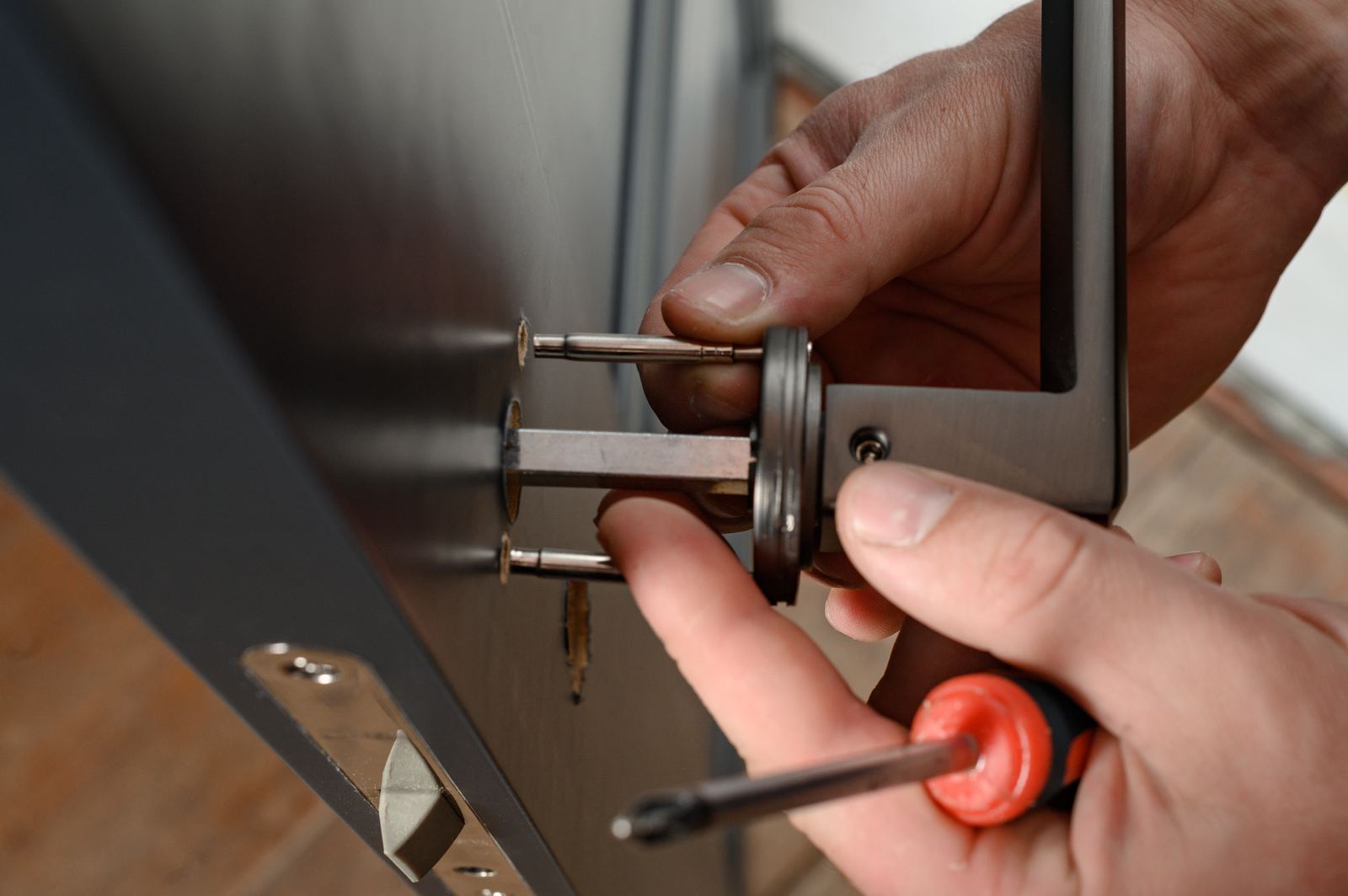
The pro typically starts with a walk-through of your doors, because commercial work is a system, not a single lock. They document each opening: hardware type, condition, duty grade, and how it fits your operations and life-safety requirements. From there the work falls into a few categories. Installation and repair covers lever sets, mortise locks, deadbolts and deadlatches, exit devices on egress doors, door closers, storefront hardware on aluminum-and-glass doors, and auxiliary items like cabinet, desk, and padlock hardware. Key control covers rekeying at turnover, designing and expanding master key systems, and managing restricted keyways that resist unauthorized copying. Access control bridges into keypads, standalone electronic levers, and credential-based systems for businesses moving beyond metal keys. Throughout, the pro pays attention to egress: exit doors must let people leave freely under fire and building codes, and reputable pros will not install hardware that traps occupants. Every phase is quoted directly before work begins.
What is a master key system and when does a business need one?
A master key system is a planned hierarchy of keys. Individual keys open only their assigned doors, while master keys open groups of doors, and a top-level key can open everything, letting an owner carry one key while each employee carries access matched to their role. A well-designed system maps to your organization: the office manager's key opens offices but not the server room, cleaning staff reach common areas only, and the owner's key opens all of it. Businesses outgrow ad-hoc keying quickly; once you have more than a handful of doors or any distinction between who may go where, a master system replaces the fat keyring and the guesswork. Good systems are designed with expansion room so future doors and departments fit without rekeying everything, and they are documented in records the owner controls. Pairing the design with a restricted keyway adds accountability, since key copies can only be made through authorized channels with your sign-off.
What do commercial hardware grades and classes mean?
Commercial hardware is specified by duty grade under the ANSI/BHMA standard, which rates locks Grade 1, Grade 2, and Grade 3 based on cycle life, strength, and durability testing. Grade 1 is the commercial benchmark, built for high-traffic doors that cycle hundreds of times a day; Grade 2 suits lighter commercial and heavy residential duty; Grade 3 is light residential hardware that has no business on a commercial entry. Beyond grade, hardware divides into classes by function and construction: cylindrical lever sets that install in a bored opening and serve most interior doors; mortise locks whose case fits into a pocket in the door edge, favored for heavy-use and institutional openings; exit devices, the push-bars required on many egress doors; deadlatches and paddle hardware for narrow-stile storefront doors; and electrified variants of each for access control. Matching class and grade to each opening's traffic, code role, and abuse level is exactly the judgment a commercial pro brings to the survey.
When should a business rekey, and what else triggers a service call?
Rekeying is the routine hygiene of commercial key control. Trigger it when an employee with keys departs on anything less than perfect terms, when a key is lost or unaccounted for, when you move into a space previously occupied by another tenant, after a contractor project where keys circulated, and on a periodic schedule if your turnover is steady. Rekeying keeps the hardware and changes only which keys work, so it is far less disruptive than replacement. Other common triggers: doors that slam or drift open as closers wear out, exit devices that stick or fail to latch, storefront locks that no longer catch as aluminum doors sag, lever sets loosening under daily abuse, and break-in damage needing same-day repair. Compliance moments matter too, since an insurance review, fire inspection, or lease requirement may surface hardware that must be corrected. A standing relationship with one local pro who knows your doors makes each of these a quick call rather than a project.
What should you have ready when the commercial pro arrives?
Authority comes first: the pro will want to deal with an owner, officer, or property manager who can approve changes to the building's key control, so have that person available and bring documentation such as a lease or business record if you are new to the pro. Prepare a door list before the survey, noting problem doors, high-traffic openings, and rooms with distinct access needs like stock rooms, offices, server closets, and cash areas. Gather what exists of your current key records: which keys open what, who holds copies, and any paperwork from a previous master key system, since expanding an existing documented system differs from starting clean. Know your constraints, including lease clauses about door hardware, landlord approval requirements, and any fire-inspection findings. For rekeying at employee turnover, decide the new key distribution in advance so the pro can cut the right quantities once. Finally, share your hours of operation, since some work is better scheduled outside business hours.
What mistakes do businesses commonly make with locks and keys?
The most common is installing residential-grade hardware on commercial doors. A Grade 3 lever from a home-improvement aisle fails in months under commercial traffic, while hardware rated Grade 1 under the ANSI/BHMA standard is engineered for exactly that duty. A second is losing control of keys: copies handed out without records, no rekey after departures, and standard keyways that anyone can copy at a kiosk, which together mean the business no longer knows who can enter. Third is neglecting egress: chaining or double-locking exit doors to stop theft creates a life-safety violation that inspectors and, far worse, emergencies will expose; a pro can solve the security concern with compliant hardware. Businesses also ignore failing door closers until a slamming door destroys the lock, defer maintenance on storefront hardware until the door will not latch overnight, and buy access-control gadgets before fixing the mechanical basics underneath. Finally, many wait for a lockout or break-in to establish a locksmith relationship instead of starting with a survey.