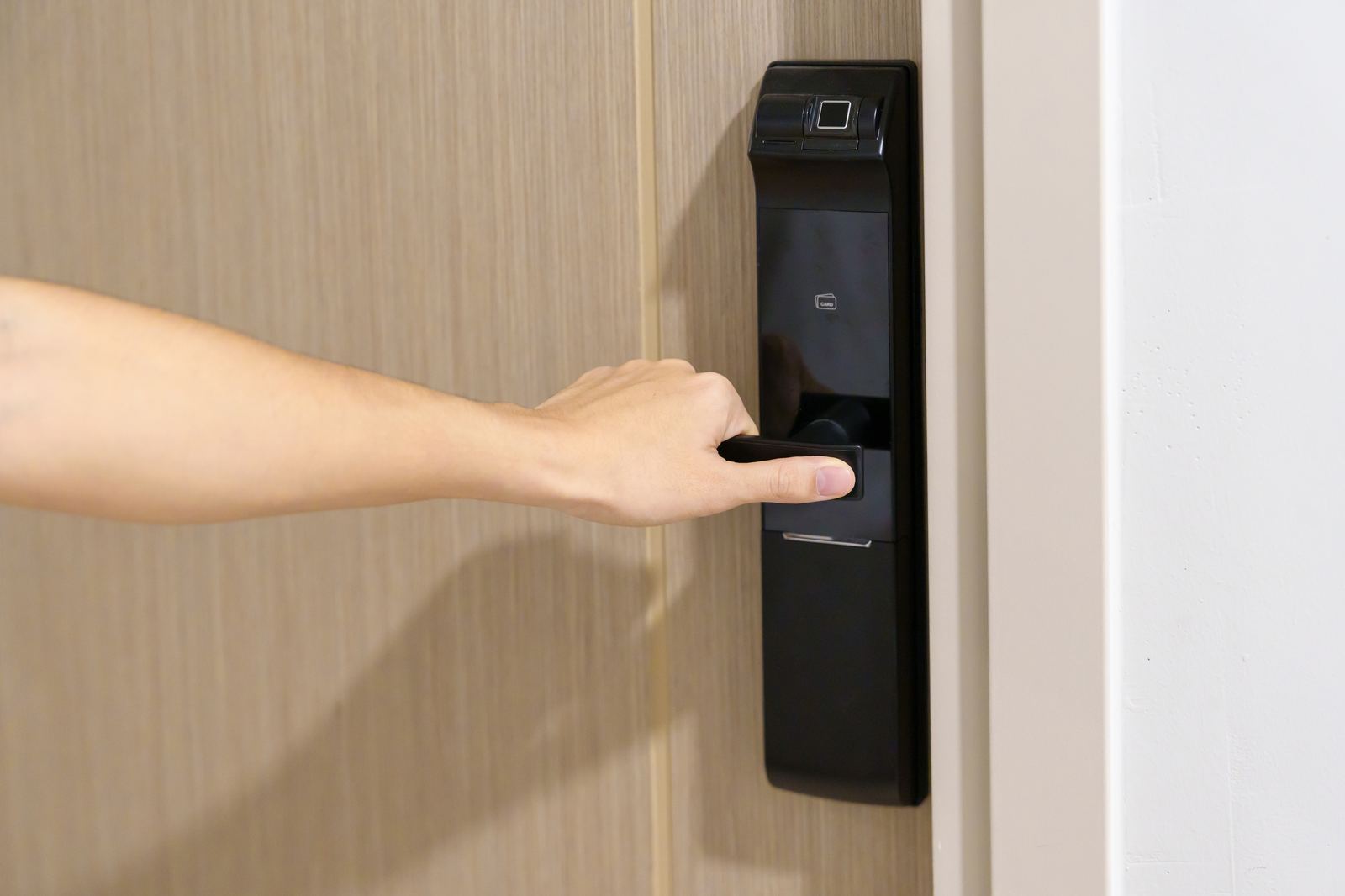
Smart lock installation replaces or retrofits your door hardware with an electronic lock you control by keypad, phone app, or voice platform, installed so the mechanism operates smoothly and the electronics pair reliably. When you call, we connect you with an independent local locksmith pro who checks your door's fit, installs and configures the lock, and quotes you directly before any work begins. We never quote prices ourselves.
What does a locksmith actually do when installing a smart lock?
The pro begins with the step most do-it-yourself installs skip: verifying the door itself. Smart locks are less tolerant of misalignment than mechanical deadbolts, because a motor, not your wrist, throws the bolt, so the pro checks that the door hangs square, the bolt travels freely into the strike, and the bore and backset match the new hardware. They then remove the old lock, fit the smart lock's exterior and interior assemblies, connect and route the cable carefully, and secure everything to the manufacturer's torque guidance so the mechanism does not bind. Next comes configuration: installing batteries, calibrating the bolt's travel, pairing the lock to your phone app or hub, setting master and user codes, and enrolling fingerprints where applicable. The pro tests locked and unlocked cycles from the app, keypad, and any backup key, walks you through code management, and confirms auto-lock settings match how your household actually uses the door. Scope is quoted before work starts.
When is a smart lock the right choice versus staying mechanical?
Smart locks earn their place when key management is the real problem: households juggling kids, dog walkers, cleaners, and guests; rental or vacation properties with rotating access; caregivers who need entry at set hours; or anyone tired of hiding a spare under a rock. Time-limited codes and access logs solve those situations cleanly. They also suit people who habitually wonder whether they locked the door, since remote status checks and auto-lock settle it. Mechanical locks remain the sensible pick when the door sees harsh exposure, when the household will not keep up with batteries, or when simplicity is the priority; a quality mechanical deadbolt rated Grade 1 or 2 under the ANSI/BHMA scale, which also publishes grading for electronic locks, is proven technology with nothing to charge or pair. Many homes land on a hybrid: a smart lock on the primary entry for convenience, mechanical hardware elsewhere. The pro can assess your doors and habits and recommend accordingly.
What affects the complexity of a smart lock installation?
Door condition dominates. A square door with a standard bore and a bolt that already glides into its strike accepts a smart lock quickly; a sagging door, shallow strike pocket, or nonstandard backset requires corrective carpentry first, because a motorized bolt that drags will drain batteries and fault out. The lock's format matters: full deadbolt replacements, retrofit units that keep your exterior cylinder, lever-style smart locks, and mortise-case commercial units each install differently. Integration adds a layer, since pairing to a hub, bridging to your home network, and connecting voice platforms or vacation-rental software takes configuration time and depends on signal strength at the door. Multi-door projects, keyed-alike backup cylinders matched to your existing house key, and removing old hardware with paint or corrosion all extend the visit. Finally, metal and fiberglass doors, glass-adjacent installations, and thick or thin door slabs outside the lock's specified range can require adapters or model changes the pro will identify up front.
What should you have ready when the pro arrives?
Have photo ID and, for rentals, the owner's or manager's authorization, since changing entry hardware is a key-control decision. If you bought a lock already, keep it boxed and confirm the pro is comfortable installing customer-supplied hardware; many pros can also supply models they know behave well and can stand behind. Have your phone charged with the lock's app downloaded, know your home network name and password, and have your hub or voice assistant powered if integration is planned, because pairing happens at the door during the visit. Decide your access plan in advance: who gets codes, which are permanent versus temporary, and whether you want auto-lock and at what delay. Mention door quirks like seasonal swelling or a latch you must lift into place. Finally, decide what happens to the backup key cylinder, including whether it should be keyed alike with other doors, and where physical backup keys will live.
What mistakes do people commonly make with smart locks?
The classic mistake is installing a smart lock on a misaligned door. The motor masks the problem for a few weeks, then batteries drain fast, the lock reports jams, and the owner blames the product when the frame was the culprit; pros fix alignment first. Buying on features alone is another: shoppers compare apps and finishes but ignore the ANSI/BHMA grading that indicates how the lock performs as a lock. Overtightening mounting bolts during self-installation pinches the mechanism and causes intermittent failures that are maddening to diagnose. People also skip the backup plan, losing track of physical override keys or letting batteries die with no fallback arranged. Code hygiene gets neglected: codes shared broadly, never rotated, and left active after a cleaner or tenant moves on defeats the point of controllable access. Finally, some owners connect everything to every platform on day one, multiplying failure points before confirming the basic lock works flawlessly for a week.
How does the referral connection work when you call?
LocksmithCallNow.com is a referral service, not a locksmith company and not a lock brand. When you call, we connect you with an independent local locksmith pro experienced with electronic and smart hardware in your area. That pro evaluates your door, discusses models or installs the unit you purchased, performs any alignment work the door needs, and quotes you directly before any work begins; we never quote prices, because scope depends on door condition, lock format, integration needs, and how many doors are involved. Working with a locksmith pro rather than a general handyperson matters for this service, because the mechanical half of a smart lock, the bolt, strike, bore, and backup cylinder, is exactly the trade's core competence, and most smart-lock frustrations trace back to that half. The pro can also key backup cylinders to match your existing house key and service the lock later as batteries, firmware, and household needs change.