One free call connects Kansas callers with independent local locksmith pros. Licensing facts, vetting steps, and every city we cover.
📞 Call (866) 370-8695Locksmith Call Now is a free referral service — we are not a locksmith. The independent local pro you're connected with quotes you directly before any work begins.

Distance matters in Kansas: a lockout in a small town can mean a pro driving in from the county seat, so confirming exactly who is coming — and what the trip will cost in total — matters more here than in denser states. Kansas does not license locksmiths; the trade is not on the Kansas Business One Stop licensing directory, there is no general statewide business license, and the state advises that some cities and counties have their own local permit rules. That leaves the Secretary of State's Business Entity Search, insurance questions, and ID checks as the vetting toolkit. Housing in the areas we cover centers on the early 1980s, with plenty of builder-grade hardware now due for attention, and about a third of households rent, keeping rekeys steady in Wichita, the Kansas City suburbs, and the college towns. LocksmithCallNow.com is a referral service — we connect you with an independent local pro who quotes and performs the work.
Only 12 of the 40 states we cover license locksmiths at the state level. Kansas's posture changes how you vet a pro — the decoded panel below gives you the exact steps.
Before anyone touches your locks, know where Kansas stands on licensing: Kansas has no statewide locksmith license. Kansas does not license locksmiths; locksmithing is not among the occupations listed on the Kansas Business One Stop licenses and permits directory, and Kansas has no general statewide business license. Consumers can confirm a locksmith business is registered with the Kansas Secretary of State using the Business Entity Search (sos.ks.gov). Kansas Business One Stop advises that businesses should check with the county and city where they operate for local permitting and filing requirements, so some municipalities may have their own business-permit rules that apply to locksmith companies. A pro who volunteers their credentials before you ask is showing you the honest pattern.
| Check | How |
|---|---|
| Step 1 | Ask for the business's full legal name and Kansas address, then look it up in the Kansas Secretary of State Business Entity Search at sos.ks.gov/eforms/BusinessEntity/Search.aspx. |
| Step 2 | Request the locksmith's photo identification on arrival and confirm it matches the company you contacted; ask whether the company carries liability insurance. |
| Step 3 | For service disputes, file a complaint with the Kansas Attorney General's Consumer Protection Division. |
Why this matters: in the vertical Google itself took to federal court over fake listings, the credential check is the one filter a bait operation can't fake. Sixty seconds with the official lookup beats an hour of review-reading — and a legitimate pro will never bristle at being checked.
Homes in the Kansas areas we cover have a weighted median build year of about 1981, which puts a broad band of builder-grade hardware in its fifth decade. Locksets installed by the subdivision-full in the late 1970s and 1980s were typically light-duty — Grade 3 under the ANSI/BHMA rating system, which runs from residential Grade 3 up to heavy-duty Grade 1 — and forty-plus years of daily use wears pins, fatigues springs, and loosens knob assemblies. Kansas adds its own stresses: wind-driven grit works into exterior cylinders, and big seasonal humidity swings keep wooden doors moving against their strike plates. An independent pro can usually rekey hardware that is still mechanically sound, and where it is not, a rated Grade 2 or Grade 1 deadbolt at the main entries is the durable replacement.
About a third of households in the Kansas areas we serve rent, concentrated in Wichita, the Kansas City suburbs, Topeka, and the college markets of Lawrence and Manhattan, where lease turnover keeps rekey work steady. Renters should start with the covered option: landlords and property managers commonly handle lock changes between tenants, and most leases require their permission before a tenant alters locks. At move-in, ask in writing whether the unit was rekeyed after the previous tenant — a routine question with a quick answer. If you pay for authorized lock work yourself, keep the itemized receipt in case the landlord will credit it.
Our buyer network covers 144 zip codes across 64 Kansas communities — about 1,575,123 residents.
The numbers sketch Kansas quickly — 144 zip codes, 64 covered communities, income around $89,784, a 1981 median build year, 35.1% renter share. Older hardware plus turnover is exactly the mix that keeps rekey and lockout calls steady.
Kansas winters mix bitter cold snaps with ice events, and both make lock work: car door locks freeze, exterior deadbolts stiffen, and cold-brittled keys snap in cylinders. Wind-driven snow finds its way into exposed padlocks and gate hardware on farm and ranch property, freezing them solid overnight.
Spring is tornado and severe-storm season on the Plains, and wind is hard on doors: racked frames leave latches and deadbolts misaligned even when the lock itself survived, and hail damage sends people through repair season rediscovering worn garage and outbuilding hardware. Moving season adds its wave of rekey calls.
Hot Kansas summers bake dashboards — hard on key fobs and remotes — and long drives between towns keep vehicle lockout calls steady. Humidity swings swell and shrink wooden doors on older housing, so latches drag one week and rattle the next. It is the easy season for scheduled rekeys and upgrades.
Fall is the window to get ahead of winter: lubricate exterior locks, adjust strike plates that summer loosened, and service gate and outbuilding padlocks before ice arrives. Student turnover in Lawrence and Manhattan drives a late-summer rekey rush, and harvest season keeps rural pros busy with equipment and shop locks.
The sequence is short. Dial (866) 370-8695; describe the lock problem and where you are around Wichita; get connected with an independent local pro. The professional asks the scoping questions — what kind of lock, what kind of key, what outcome you need — and gives you their quote before work is agreed. You can stop at any point. We take no payment from you and set no prices.
Run the no-cost options in order: doors and accessible windows you haven't tried; anyone with a spare; for apartment dwellers in Wichita, the super or management office; for cars, the roadside plan you may already pay for (AAA, insurer add-ons) or the automaker's app on your phone. Honest pros would rather you try these first — the calls that remain are the ones that truly need them.
| City | Residents (ACS) | Zip codes | Median build yr |
|---|---|---|---|
| Wichita | 425,167 | 32 | 1975 |
| Overland Park | 191,173 | 13 | 1986 |
| Kansas City | 159,505 | 15 | 1964 |
| Olathe | 145,304 | 4 | 1993 |
| Derby | 30,108 | 1 | 1990 |
| Shawnee | 74,437 | 6 | 1985 |
| Lawrence | 102,426 | 5 | 1984 |
| Lenexa | 56,764 | 7 | 1993 |
| Leawood | 37,781 | 3 | 1981 |
| Mission | 31,049 | 4 | 1962 |
FBI Crime Data Explorer estimates put Kansas's burglary rate at 261.6 per 100,000 residents (2024), ranking it #15 of 51 in our State Lock-Risk Study — which combines burglary rates with housing age and renter share from Census data. The full methodology and every state's numbers are published openly. See the full study.
Independent Kansas pros, quoted before work begins.
Wichita's housing centers on the early 1980s, with an older core and newer suburbs like Andover and Derby pushing in both directions. Ownership is high — over eighty percent — so residential calls lean toward rekeying after a purchase, upgrading original hardware, and smart-lock installs out in Goddard. Kansas weather earns its reputation: winter cold snaps freeze car doors and stiffen deadbolts, and spring storms have homeowners checking gates and outbuildings once the wind dies down. This is also thoroughly a driving city, so vehicle lockouts and transponder key programming are daily work. The independent locksmiths we refer callers to cover the city and the towns around it without much fuss.
Kansas coverage here hugs the eastern edge of the state: Leavenworth, Shawnee, Prairie Village, and the towns between. Housing spans a wide range, from Prairie Village's mid-century blocks to newer construction farther out, with a late-1980s median overall, which keeps locksmiths moving between worn original hardware and modern smart-lock installs. Fort Leavenworth's military rotations mean regular move-in rekeys nearby, and about a quarter of area households rent. Winters bring the seasonal round of frozen car doors, stiff deadbolts, and keys that snap in the cold. Independent pros in these communities handle house lockouts, rekeying, lock replacement, and car key programming.
Every one of these smaller Kansas communities is inside the buyer coverage map — no page needed, the call routes the same way:
Near a state line? The same call line covers Missouri, Nebraska, Colorado — routing follows the pro's real coverage, not the border.
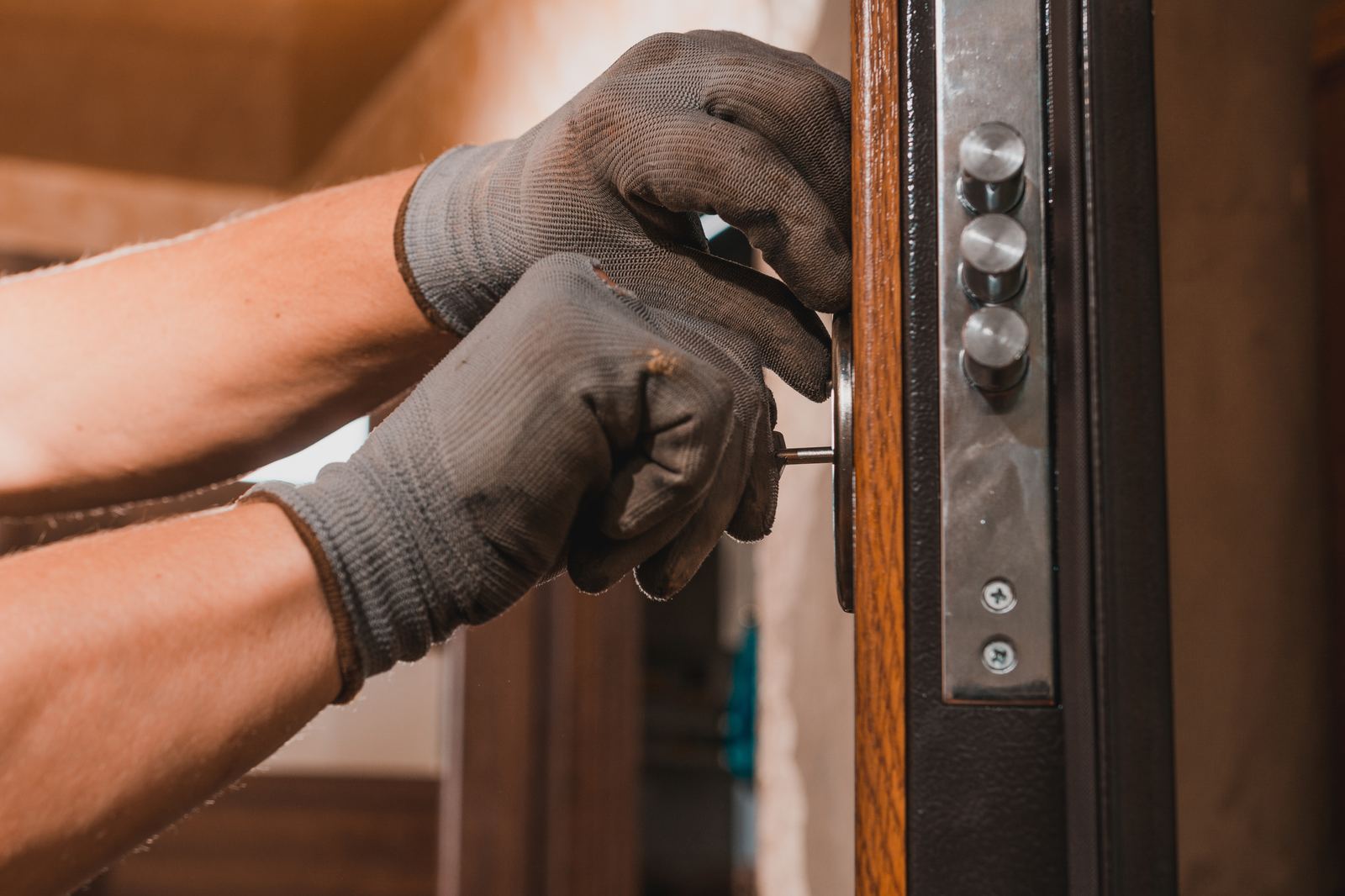
Verify the business: look up its legal name in the Kansas Secretary of State's Business Entity Search at sos.ks.gov, confirm a physical Kansas address, ask about liability insurance, and match the technician's photo ID to the company you called. Kansas has no locksmith license and no general statewide business license, though some cities have local permit rules worth a quick call to city hall.
Yes — rekeying at move-in is the standard step. It changes the pins in your existing locks so keys held by previous owners, contractors, and neighbors stop working, and it is faster than replacing hardware that is still sound. Buyers usually schedule it for closing day; renters should ask the landlord first, since many rekey between tenants as standard practice.
Yes, in specific ways: wind-driven grit wears exterior cylinders, big humidity swings keep wooden doors moving against strike plates, ice storms glaze car and gate locks, and spring wind storms can rack door frames out of alignment. A fall lubrication of exterior hardware and a strike-plate check prevent most seasonal failures before they strand you.
Independent automotive locksmiths cut and program transponder keys and fobs for most common makes, and many drive to you — worth confirming given Kansas distances. Check the covered routes first: roadside-assistance plans, some auto policies, and some new-car warranties include lockout service or key replacement. A few of the newest models still require dealer programming, and a straightforward pro will tell you.
We are a referral service, not a locksmith. Call with your ZIP code and the problem, and we connect you with an independent local pro who covers your area — which in Kansas may mean a technician based a town or two away. That pro quotes the complete price, including any travel, and performs the work. Confirm the total before dispatch.
The bait-price pattern flagged in Federal Trade Commission guidance: a low advertised rate that multiplies on arrival, often with a claim the lock must be drilled. Distance adds a Kansas wrinkle — insist the quote include the trip charge up front. Routine lockouts rarely require drilling; ask for ID and an itemized receipt, and report problems to the Kansas Attorney General.
It depends on the hour, the pro's current calls, and where in the Wichita area you are. The professional you're connected with gives you their own realistic arrival window on the phone — treat a too-good-to-be-true promise as a red flag anywhere.
Yes — the network includes independent pros who work storefronts, offices, and multi-tenant buildings around Wichita: master-key systems, commercial-grade hardware, panic-hardware-adjacent lock work, and after-hours lockouts.
Often, yes — late-night and holiday labor is real labor. The honest pattern is disclosure on the phone as part of the quote. A number that grows after arrival is the dishonest pattern, and you can decline before work begins.